Arcadia For Design Lovers: Architecture, Dining And Daily Life
July 2, 2026
July 2, 2026
What if your neighborhood felt curated without feeling staged? In Arcadia, that balance is part of the appeal. If you care about architecture, good food, outdoor rhythm, and a setting that feels both polished and lived-in, Arcadia offers a version of Phoenix life that stands apart. Here’s what makes the neighborhood so compelling, and why so many design-minded buyers keep it on their radar. Let’s dive in.
Arcadia is more than a well-known Phoenix neighborhood name. According to the City of Phoenix historic survey, it developed as a rural estate subdivision in the central Salt River Valley, with early tracts recorded in 1915 and 1919. That history still shapes the way the area looks and feels today.
Instead of reading like a standard postwar subdivision, Arcadia often feels leafy, spacious, and layered. Mature trees, lawns, and citrus plantings trace back to the area’s irrigation history, including pumping plants and underground irrigation systems that supported the original groves. That agricultural foundation is a big part of why the neighborhood still feels established and visually distinct.
It is also worth noting that Arcadia’s boundaries can vary by source. The City of Phoenix historic survey, the Arcadia Camelback Mountain Neighborhood Association, and visitor guides describe the edges a little differently. For buyers, that means “Arcadia” may refer to the historic plat, the neighborhood association area, or the broader lifestyle corridor people commonly use in real estate and dining conversations.
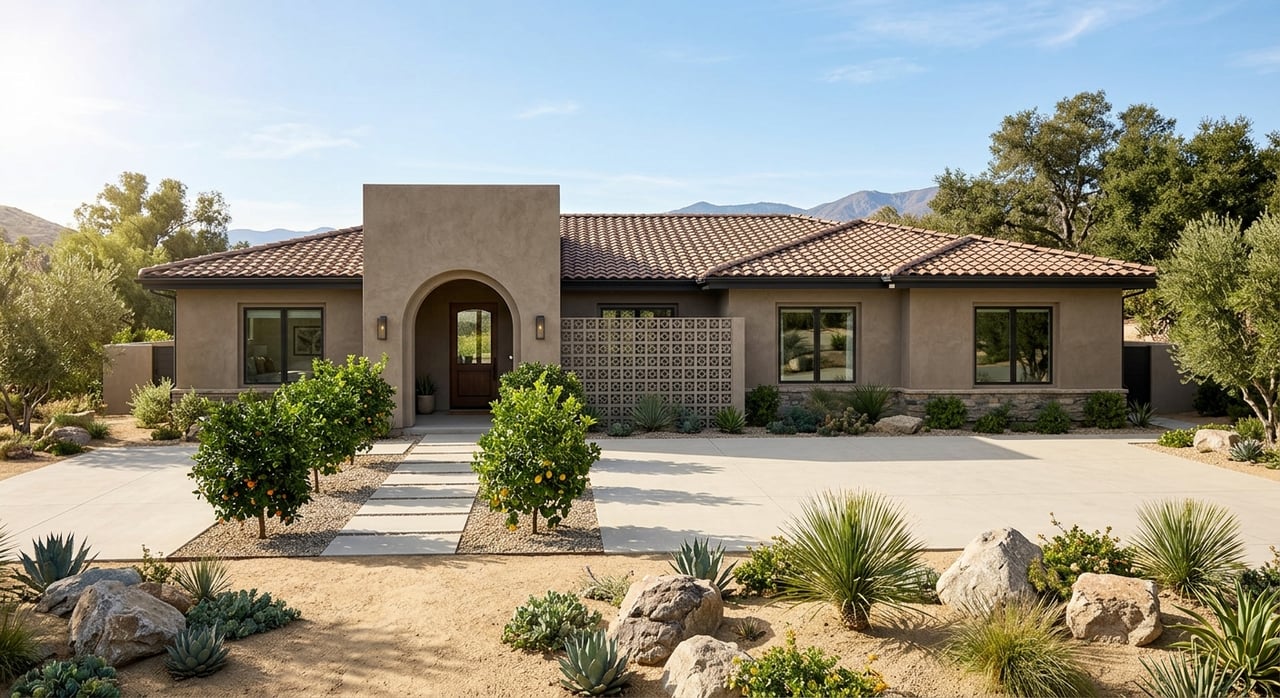
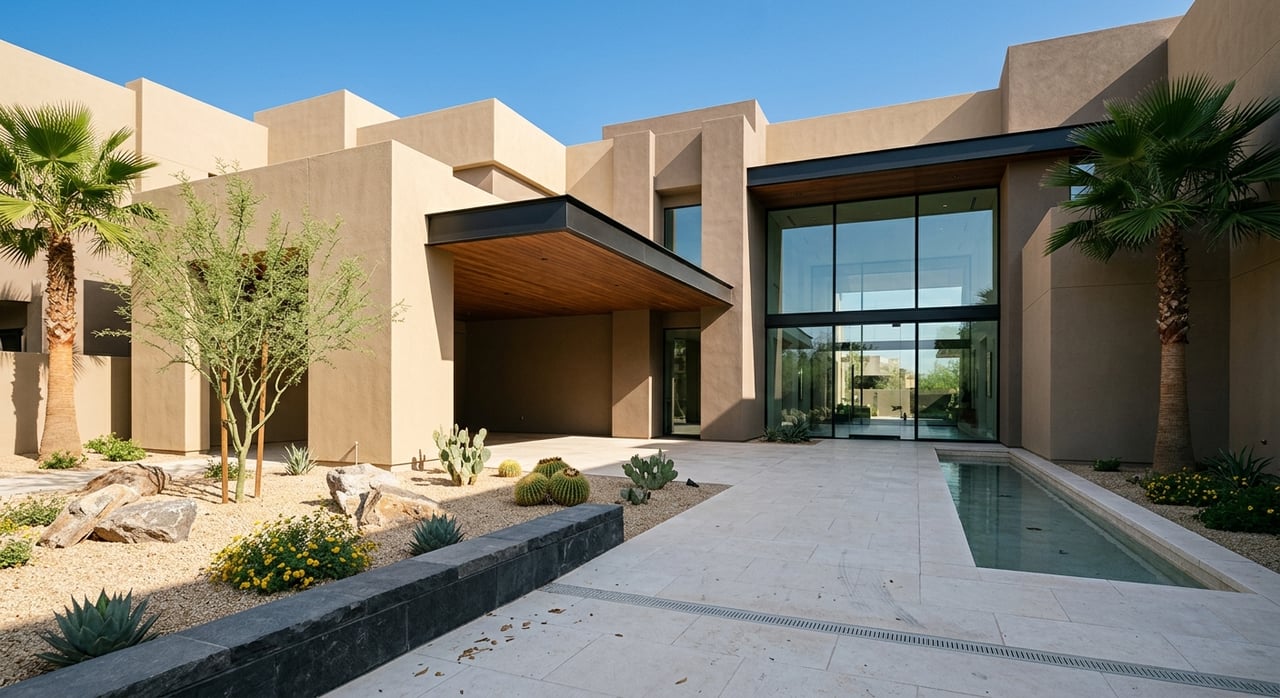
If you love design, Arcadia rewards a closer look. The neighborhood is often associated with ranch homes, and that shorthand is not wrong, but it is incomplete. The City of Phoenix survey documents a wider architectural mix that includes Monterey Revival, Pueblo Revival, and Spanish Colonial Revival homes.
That variety gives Arcadia more visual depth than many buyers expect. You can find homes with low, sprawling profiles as well as revival-style details that reflect the neighborhood’s early estate character. The result is a streetscape that feels collected over time instead of mass-produced all at once.
Arcadia’s original development standards also matter. Early lots were marketed at roughly five to ten acres with minimum construction-cost requirements for buyers seeking a rural setting. Even though the housing inventory has evolved over the years, that large-lot history helps explain why Arcadia remains a strong setting for renovation, rebuild activity, and custom-home interest.
For some buyers, historic character is part of the draw. The Phoenix Historic Property Register protects listed properties from demolition and adverse alterations through a special development review process, and qualifying properties may also be eligible for rehabilitation incentives. That framework helps preserve meaningful parts of the neighborhood’s architectural story.
One notable example is the Avery House, built in 1920 and added to the city register in 2021. The City of Phoenix notes its connection to Frank Avery and the citrus industry that helped shape the area. Details like that give Arcadia a sense of continuity that many newer neighborhoods simply do not have.
Arcadia is not just about homes. It is also one of Phoenix’s most recognizable dining districts, with a concentration of restaurants packed into a relatively compact area. Visit Phoenix describes the neighborhood as small in footprint but dense in options, which says a lot about how active the local lifestyle can feel.
The restaurant lineup spans casual mornings, relaxed lunches, neighborhood dinners, and more polished evenings out. Visit Phoenix highlights names like Chelsea’s Kitchen, Beckett’s Table, Buck & Rider, The Henry, O.H.S.O. Brewery, La Grande Orange Grocery and Pizzeria, Postino, The Stand, Nook Kitchen Arcadia, Trevor’s, and Essence Bakery. For residents, that means dining is not an occasional event. It becomes part of your weekly routine.
This dining density also changes how the neighborhood functions. Arcadia can feel residential and calm, but it is never disconnected from places to gather. If you like the idea of a neighborhood where patios, coffee stops, and dinner plans are easy to fold into everyday life, Arcadia checks that box.
Design lovers usually notice more than architecture alone. In Arcadia, the lifestyle story extends to art and retail as well. The Shemer Art Center, located at Camelback Road and Arcadia Drive at the base of Camelback Mountain, is a City of Phoenix Point of Pride and offers classes, workshops, lectures, exhibitions, events, and a sculpture garden.
That matters because it gives the neighborhood a cultural anchor. Arcadia is not only a place to admire design from the curb. It is also a place where creative programming is part of the environment. Visit Phoenix also points to FOUND Arcadia and urbAna as design-forward shopping stops, reinforcing the idea that style here shows up in both big and small ways.
For buyers who value aesthetics in daily life, that blend can be powerful. It creates a neighborhood experience that feels intentional without becoming overly formal.
Arcadia’s appeal also comes from how easy it is to be outside. Visit Phoenix identifies the Arizona Canal Trail as a favorite for biking, jogging, and casual walks, with connections to local food and drink spots along the way. That kind of access helps the neighborhood feel active and practical at the same time.
G.R. Herberger Park adds another useful layer to daily life. The City of Phoenix lists ADA-accessible features, picnic areas, pickleball, tennis, volleyball, restrooms, drinking fountains, and shade structures. In a neighborhood known for design and dining, these everyday amenities help keep Arcadia grounded as a place people truly live, not just visit.
Then there is Camelback Mountain, which acts as both backdrop and lifestyle feature. The City of Phoenix describes it as one of the nation’s top hiking destinations, with trailheads open from sunrise to sunset, extremely difficult routes, parking restrictions, and a year-round ban on dogs. Visit Phoenix notes that Echo Canyon Trail is a 1.2-mile one-way climb with about 1,280 feet of elevation gain to the 2,704-foot summit.
For you as a buyer, that means scenery is not abstract here. It is part of the neighborhood’s daily visual experience, and for many residents, so is access to hiking and outdoor movement.
One of Arcadia’s strengths is that it offers a residential feel without isolating you from the rest of the metro. Visit Phoenix notes the neighborhood’s proximity to Old Town Scottsdale, where you will find boutique shopping, galleries, restaurants, bars, lounges, and nightlife. That makes it easier to enjoy a broader lifestyle footprint while still coming home to a quieter setting.
Downtown Phoenix is also within reach. The City of Phoenix describes downtown as the city’s transportation hub and cultural center, with access to freeways, public transit, and Sky Harbor International Airport. For buyers who split time between markets or travel often, that regional convenience can be a meaningful part of Arcadia’s value.
Arcadia also sits near a notable resort corridor. Visit Phoenix highlights The Global Ambassador, Royal Palms Resort, and The Phoenician, placing the neighborhood within a broader luxury Phoenix context. That nearby hospitality layer adds another dimension for buyers who appreciate resort dining, guest accommodations, and polished surroundings close to home.
If you are exploring Arcadia, it helps to look beyond the headline reputation and focus on the details that shape daily life. The neighborhood’s strongest appeal often comes from the combination of physical character and lived experience.
A few things stand out:
That mix is why Arcadia continues to resonate with buyers who want more than square footage alone. It offers style, yes, but also context, texture, and a stronger sense of place.
Some neighborhoods are easy to summarize and quick to forget. Arcadia is not one of them. Its citrus history, architectural variety, dining culture, outdoor access, and connection to the broader Phoenix luxury landscape all work together to create a neighborhood with staying power.
If you are drawn to places that feel visually rich and genuinely livable, Arcadia deserves a closer look. And if you want guidance on how specific pockets, property styles, and lifestyle priorities align, Cavanaugh Luxury Group can help you navigate the opportunity with the kind of local, principal-led insight that luxury buyers value.
We’re dedicated to guiding you through every step of your home buying and selling journey. Our commitment to luxury real estate is something we embody daily. With years of expertise, we offer comprehensive insights to ensure your experience maximizes the value we can provide for you.