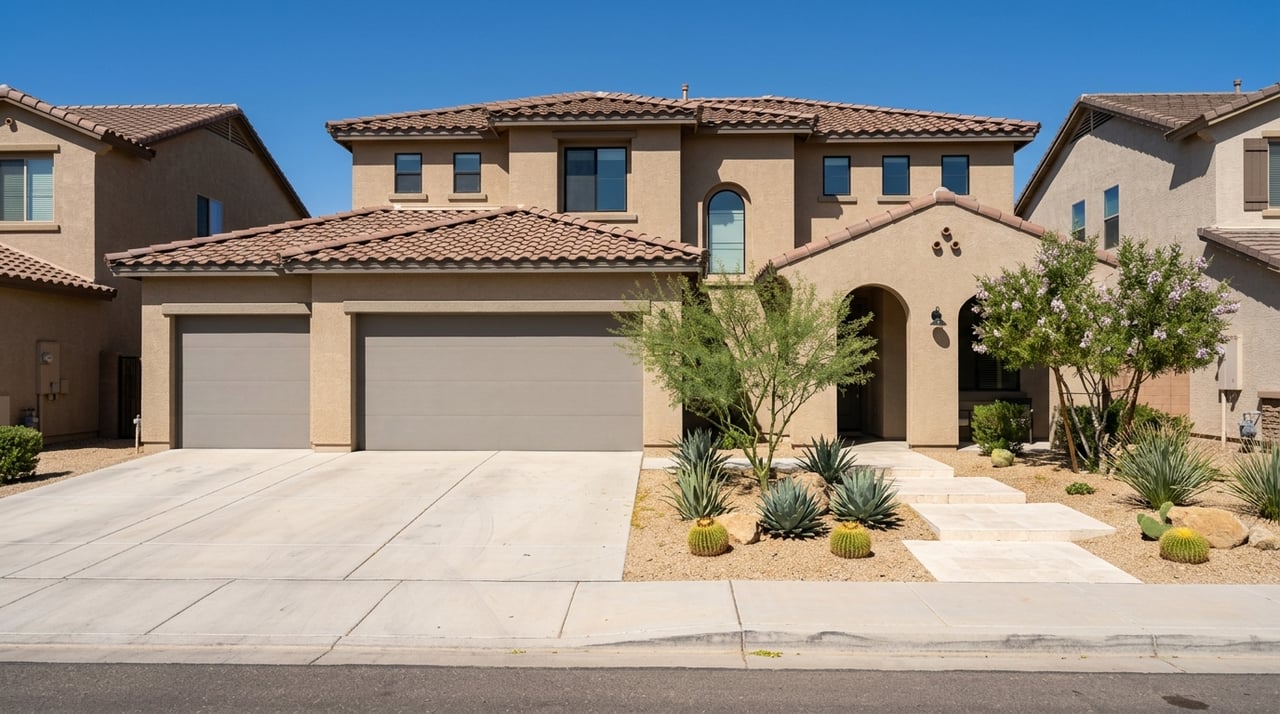
Comparing Chandler vs Gilbert Homes for Move-Up Buyers
April 16, 2026
April 16, 2026
Choosing between Chandler and Gilbert for your next home is not just about price. If you are moving up in the East Valley, you are likely weighing space, commute, community feel, and long-term value all at once. The good news is that both cities offer strong options, but they reward different priorities. This guide breaks down the practical tradeoffs so you can focus on the market that fits your lifestyle and goals. Let’s dive in.
For move-up buyers, Chandler and Gilbert look similar on the surface. Both are large East Valley suburbs, both are somewhat competitive housing markets, and both attract buyers looking for more home, more neighborhood amenities, and a strong day-to-day living experience.
Recent sales data shows a small pricing gap between the two. In February 2026, Chandler’s median sale price was $557,000 while Gilbert’s median sale price was $575,000, according to recent market data. Homes also sold in a similar timeframe, with Chandler averaging 53 days on market and Gilbert averaging 56.
That means your decision may come down less to broad market conditions and more to what you want your next chapter to look like.
If your goal is to stretch your move-up budget a bit further, Chandler currently has the edge. The median sale price is slightly lower, which can create more flexibility for upgrades like a larger lot, a pool, or a more updated interior.
Gilbert, on the other hand, often supports slightly higher price points. Census data shows a higher median household income in Gilbert than in Chandler, which helps explain why more expensive move-up inventory can be common there. You can review that context in the U.S. Census QuickFacts data for Chandler.
Neither city is a bargain market, and both remain competitive. Still, if value is high on your list, Chandler may give you a little more room to work with.
A move-up home should improve your daily life, not just your square footage. That is why commute patterns can play such a big role in this decision.
According to ACS 2019-2023 data, Chandler’s mean travel time to work was 24.2 minutes, compared with 26.1 minutes in Gilbert. That is not a dramatic difference, but over time it can shape how convenient your routine feels.
Chandler has a major advantage for buyers who want to stay close to job centers. The city describes the Price Corridor as a 5.7-square-mile business district at Loop 101 and Loop 202 with 42,060 jobs.
If you work in technology, finance, healthcare, or office-based roles in that part of the Valley, Chandler may offer a simpler daily rhythm. The city is also investing in mobility projects, including Loop 202 widening, which reinforces its commuter-friendly appeal.
Gilbert still offers strong connectivity, but the pattern is a little different. The town highlights major corridors and infrastructure projects such as the Ocotillo Road extension and the Lindsay Road/SR 202 interchange, which points to a broader regional commute pattern.
For many buyers, that tradeoff is worth it. If you value suburban planning, newer neighborhoods, and a strong community feel, Gilbert’s slightly longer commute footprint may be an easy compromise.
One of the biggest differences between Chandler and Gilbert is how each city is growing.
Chandler is more built out. The city says it is 94% built out, with limited vacant land remaining and much of that planned for non-residential use. Its recent housing growth has come with a strong emphasis on infill and redevelopment rather than large new greenfield communities.
Gilbert still has more room to expand. The town says its residential market remains strong, that builders continue to seek vacant land for new subdivisions, and that water resources are planned for build-out demands, including undeveloped land. Gilbert also offers a What’s Developing Nearby planning resource for tracking active projects.
In practical terms, Chandler may appeal more if you want an established setting with mature landscaping, proven amenities, and a more built-in feel. Gilbert may appeal more if you are hoping for newer construction, newer streetscapes, and the experience of living in a still-evolving planned community.
That difference can shape everything from home style to resale positioning. It can also affect how quickly you find the right property, especially if you are searching for specific features that are more common in newer homes.
Both cities offer recognizable master-planned and amenity-rich areas, but the character is a little different.
In Chandler, established areas include Ocotillo, Fulton Ranch, and Sun Groves, alongside infill and adaptive reuse efforts tied to downtown and other redevelopment zones. This gives buyers a mix of established residential pockets and select updated opportunities.
In Gilbert, planning materials identify Morrison Ranch as a 1,527-acre mixed-use master-planned community, and also reference Power Ranch, Adora Trails, and Seville. These examples help illustrate why Gilbert is often associated with a more classic master-planned suburban feel.
For move-up buyers, this often comes down to preference. Do you want a more established setting with convenient access to employment centers, or do you want the feel of a newer community plan with room for continued growth?
When buyers compare Chandler and Gilbert, schools often come up early. The most useful way to think about this is not which city is universally better, but which district setup may better match your needs.
Chandler Unified School District says it serves 45 school sites, more than 40,000 students, and has a 92% four-year graduation rate. The district also highlights open enrollment, traditional academy programs, and dual-language immersion options.
Gilbert Public Schools says it serves 39 schools across Gilbert and Mesa, with more than 31,000 students and 4,500+ staff. For 2025-26, the district says it has 32 A-rated schools and 13 A+ School of Excellence awards.
On paper, both districts present strong options. Chandler may stand out if you want a larger district with broad program variety. Gilbert may stand out if you are focused on a very high concentration of A-rated schools within a somewhat smaller system.
Because both districts use open enrollment and publish capacity and boundary information, the exact neighborhood can matter just as much as the city name. If schools are one of your top decision points, it makes sense to compare specific address areas rather than rely only on a Chandler versus Gilbert label.
There is no one-size-fits-all winner here. The right choice depends on what you want your next home to improve.
If you are serious about moving up, it helps to compare Chandler and Gilbert with a decision framework instead of a broad impression. Start with the lifestyle details that affect you every day, then work outward.
Use a short checklist like this:
That approach usually makes the answer much clearer.
A move-up purchase is about more than buying a larger house. It is about choosing the setting that supports how you want to live next. If you want tailored guidance as you compare East Valley options, Cavanaugh Luxury Group offers a polished, client-first approach to helping you evaluate the right fit and move with confidence.



We’re dedicated to guiding you through every step of your home buying and selling journey. Our commitment to luxury real estate is something we embody daily. With years of expertise, we offer comprehensive insights to ensure your experience maximizes the value we can provide for you.